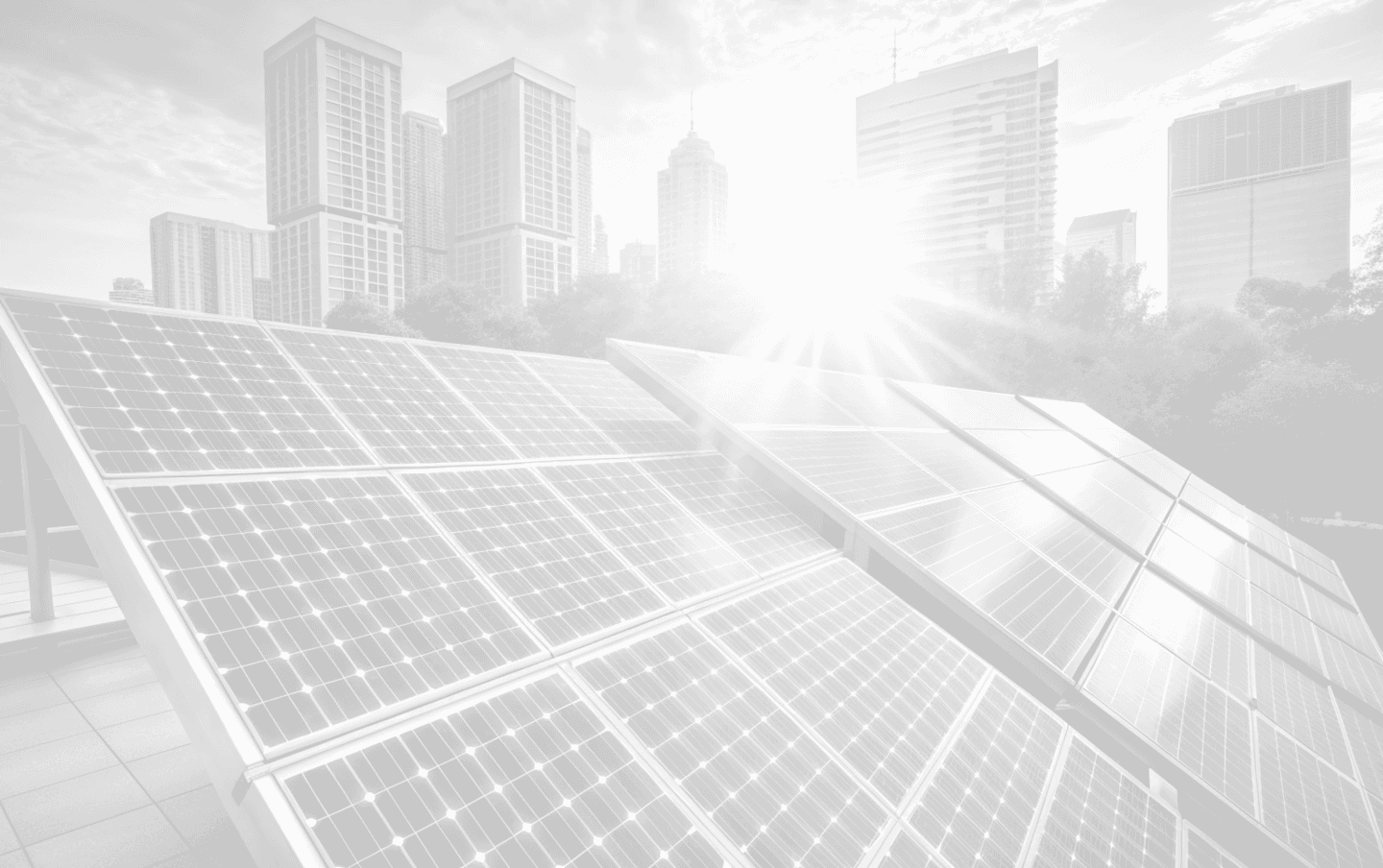
The cost of installing solar panels on a 1,000 m² plot depends on several variables, including the system's installed capacity, equipment quality, site conditions, engineering requirements, and installation complexity. Rather than relying on a fixed price, every project should be evaluated individually to ensure the system is designed for maximum efficiency and long-term performance.
A typical ground-mounted solar PV project includes much more than solar panels. The total investment generally covers PV modules, inverters, mounting structures, electrical components, engineering services, permitting, installation, testing, and commissioning. Depending on the project's scope, additional expenses such as land preparation, grid connection, and security infrastructure may also be required.
For investors, the primary objective should not be finding the lowest installation price but maximizing long-term energy production and return on investment. High-quality components, proper engineering, and professional installation significantly improve system performance while reducing maintenance costs over the lifetime of the project.
How Much Solar Capacity Can Be Installed on a 1,000 m² Plot?
Get a Quote for Your Project
Contact our expert team for solar power plants, solar panels, and industrial energy solutions.
One of the most frequently asked questions is, "How many kilowatts of solar panels can be installed on a 1,000 m² plot?"
The answer depends on multiple design factors, including:
•Solar panel efficiency
•Module dimensions
•Tilt angle
•Row spacing
•Shading analysis
•Maintenance pathways
•Local regulations
With today's high-efficiency photovoltaic modules, a properly designed ground-mounted system can typically accommodate 80 kWp to 120 kWp of installed capacity on approximately 1,000 square meters of usable land.
However, every site is unique. Sloped terrain, irregular land shapes, nearby trees, buildings, or other shading obstacles may reduce the available installation area. Engineers also need to allocate space for maintenance access, electrical equipment, transformers (where applicable), and safety clearances.
Therefore, land size alone is never enough to determine the final system capacity. A professional site survey and solar assessment should always be completed before estimating production potential or investment costs.
Higher installed capacity generally results in greater annual electricity generation. However, actual energy output depends largely on local solar irradiation levels. Two systems with identical capacities can produce significantly different amounts of electricity if they are located in regions with different sunlight conditions.
Selecting premium solar panels is equally important. Modern high-efficiency modules generate more electricity within the same footprint, improving both land utilization and long-term financial returns.
Explore Daxler Energy's solar panel solutions: https://daxlerenergy.com/en/products
What Factors Affect the Cost of a Ground-Mounted Solar PV System?
The investment cost of a solar power system is influenced by numerous technical and environmental factors. While solar panels account for a significant portion of the budget, they represent only one component of the overall investment.
A complete ground-mounted solar project typically includes:
•Solar panels
•Inverters
•Mounting structures
•DC and AC electrical components
•Engineering and design
•Civil works
•Electrical infrastructure
•Installation labor
•Testing and commissioning
Ground-mounted installations generally require more extensive site preparation than rooftop systems. Earthworks, fencing, foundations, drainage improvements, and utility interconnection can substantially influence total project costs.
Because every project has different requirements, investors should compare quotations based on their technical scope rather than price alone. A comprehensive proposal should clearly identify all equipment specifications, engineering services, installation responsibilities, warranties, and estimated energy production.
Solar Panel, Inverter, and Mounting Structure Selection
Equipment selection has the greatest impact on both installation cost and long-term system performance.
Solar panels differ in:
•Cell technology
•Efficiency
•Power output
•Temperature coefficient
•Manufacturer warranty
•Performance guarantee
Although premium photovoltaic modules generally require a higher initial investment, they often deliver superior lifetime energy production and lower degradation rates, resulting in better long-term financial returns.
Inverters are equally critical. As the component responsible for converting DC electricity into usable AC power, inverter efficiency directly affects overall system performance. High-quality inverter brands typically offer:
•Higher conversion efficiency
•Advanced monitoring capabilities
•Better grid compatibility
•Longer service life
•Lower maintenance requirements
The mounting structure should also be engineered according to local wind loads, snow loads, and soil conditions. Galvanized steel and aluminum structures are commonly preferred because they provide excellent corrosion resistance and long operational life.
Although these premium components may increase upfront investment costs, they significantly improve system reliability and lifetime energy production.
Land Conditions, Infrastructure, and Labor Costs
Site characteristics play a major role in determining the final installation budget.
Flat, stable land generally requires less preparation, allowing faster and more economical installation. Conversely, rocky terrain, steep slopes, or unstable soil conditions may require excavation, grading, reinforced foundations, or customized mounting structures.
Infrastructure requirements can also substantially affect project costs. If the site is located far from the nearest grid connection point, additional expenses may include:
•Underground cabling
•Medium-voltage equipment
•Transformers
•Utility interconnection works
•Distribution infrastructure
Ground-mounted projects often require perimeter fencing, surveillance cameras, lighting systems, and access roads to improve operational safety and security.
Installation quality is another key consideration. Experienced engineering and installation teams help ensure optimal system performance, minimize future maintenance requirements, and maximize long-term energy production.
Rather than focusing solely on the lowest installation price, investors should evaluate the complete engineering solution, equipment quality, workmanship, warranty coverage, and expected lifetime performance before making a decision.
What Costs Should Be Included in a Ground-Mounted Solar Installation Budget?
Planning a ground-mounted solar project requires a comprehensive understanding of every cost involved—not just the price of the solar panels. A professional cost analysis considers equipment, engineering, civil works, electrical infrastructure, installation, commissioning, and long-term operational expenses. Accurately estimating these costs allows investors to evaluate the project's financial viability and avoid unexpected expenses during construction.
Unlike rooftop installations, ground-mounted solar systems often require additional site development. Land grading, foundation preparation, fencing, drainage improvements, and utility interconnection can represent a significant portion of the total investment. The complexity of these requirements varies depending on the site's location, topography, soil conditions, and local grid infrastructure.
A complete cost assessment should include the following categories:
•Solar PV modules
•Grid-tied or hybrid inverters
•Mounting and racking systems
•DC and AC cabling
•Combiner boxes and electrical protection equipment
•Monitoring and communication systems
•Engineering and project design
•Site surveys and feasibility studies
•Land preparation and civil works
•Installation labor
•Utility interconnection costs
•Transformer (if required)
•Testing and commissioning
•Security fencing and surveillance systems
•Transportation and logistics
•Operation and maintenance planning
While some suppliers provide an attractive equipment price, engineering services or installation may be excluded from the quotation. Investors should always request an itemized proposal that clearly defines the project scope to ensure accurate cost comparisons.
Another important consideration is long-term operating expenses. Although photovoltaic systems require relatively little maintenance, periodic inspections, inverter servicing, cleaning, vegetation management, and monitoring should be included in lifetime financial projections.
How Does System Size Affect Energy Production and Payback Period?
One of the biggest advantages of a ground-mounted solar installation is its ability to generate clean electricity for decades with minimal operating costs. However, annual energy production depends on much more than installed capacity alone.
Several factors influence overall system performance:
•Geographic location
•Solar irradiation levels
•Panel orientation
•Tilt angle
•Module efficiency
•Inverter efficiency
•System losses
•Ambient temperature
•Shading conditions
•Maintenance quality
For example, a well-designed 100 kWp ground-mounted PV system can typically generate approximately 140,000–180,000 kWh per year, depending on local solar resources and environmental conditions. Regions with higher annual solar irradiation naturally achieve greater energy yields than areas with lower sunlight availability.
Because electricity production directly determines financial returns, professional simulation software is typically used during project planning. These simulations estimate expected annual generation, system losses, and long-term performance using historical meteorological data.
How Is the Return on Investment Calculated?
The financial return of a solar investment depends on the relationship between installation costs and the value of the electricity generated over time.
A typical ROI assessment includes:
•Initial capital expenditure (CAPEX)
•Annual electricity generation
•Electricity price or avoided energy costs
•Operation and maintenance expenses
•Equipment replacement costs (if applicable)
•Financing costs
•Inflation assumptions
•Electricity price escalation
•System degradation over time
Businesses that consume most of the electricity they generate often achieve faster returns because they offset expensive retail electricity purchases. In contrast, projects that rely primarily on electricity sales to the grid may experience different payback periods depending on local regulations and compensation mechanisms.
Because electricity prices tend to increase over time while sunlight remains free, many commercial solar projects become increasingly profitable throughout their operational lifetime.
What Factors Influence the Solar Payback Period?
The payback period represents the time required for cumulative savings and revenue to recover the initial investment.
Although every project is unique, several variables have the greatest impact on financial performance:
System Capacity
Larger systems generally produce more electricity and generate higher annual savings, provided sufficient energy demand or export opportunities exist.
Equipment Quality
Premium solar panels and inverters usually maintain higher efficiency over decades, improving lifetime electricity production and reducing maintenance costs.
Site Conditions
Excellent solar exposure, minimal shading, and favorable environmental conditions maximize annual energy generation.
Electricity Prices
Higher electricity tariffs increase the value of every kilowatt-hour generated, accelerating the return on investment.
Installation Quality
Proper engineering and professional installation reduce system losses, improve reliability, and minimize unexpected maintenance expenses.
Maintenance Strategy
Routine inspections, cleaning, vegetation control, and performance monitoring help maintain optimal system efficiency throughout its operating life.
Understanding Long-Term Value Beyond Payback
Although investors often focus on the payback period, it should not be the only metric used to evaluate a solar project.
A professionally engineered ground-mounted PV system typically has:
•A design life exceeding 25 years
•Solar panel performance warranties of up to 25–30 years
•Low annual operating costs
•Minimal fuel costs
•Stable electricity production
•Protection against rising energy prices
After the investment reaches its payback point, the electricity generated continues to provide financial value for many additional years. This extended operational lifespan is one of the primary reasons businesses, manufacturers, agricultural operations, and commercial facilities increasingly adopt solar energy.
In addition to direct financial savings, solar investments contribute to sustainability goals by reducing carbon emissions and dependence on conventional energy sources. Many organizations also benefit from stronger environmental credentials, improved ESG performance, and enhanced corporate reputation.
What Should You Look for When Comparing Ground-Mounted Solar Installation Quotes?
Choosing the right solar EPC (Engineering, Procurement, and Construction) partner is just as important as selecting high-quality equipment. While installation cost is a major consideration, the lowest-priced proposal does not always provide the best long-term value. Investors should compare quotations based on technical specifications, engineering expertise, warranty coverage, and projected system performance rather than focusing solely on the initial investment.
A comprehensive proposal should clearly outline every component of the project, including equipment specifications, installation scope, engineering services, commissioning procedures, and after-sales support. Transparent quotations reduce the risk of unexpected costs during construction and help investors make informed financial decisions.
When evaluating multiple proposals, consider the following:
•Installed system capacity (kWp)
•Solar panel manufacturer and model
•Inverter brand and efficiency
•Mounting structure materials
•Estimated annual energy production
•Performance ratio (PR)
•System design and engineering quality
•Grid connection scope
•Construction timeline
•Warranty terms
•Monitoring platform
•Maintenance services
•Technical support availability
•Previous project references
•Compliance with local electrical standards
A reputable EPC contractor should also provide a detailed energy production simulation based on the project's exact location rather than generic production estimates. Modern simulation software considers historical weather data, shading analysis, temperature effects, and system losses to produce realistic performance forecasts.
Why Equipment Quality Matters
Although solar modules typically receive the most attention, every component contributes to overall system performance.
Solar Panels
High-quality photovoltaic modules generally offer:
•Higher conversion efficiency
•Lower annual degradation rates
•Better performance under high temperatures
•Longer product warranties
•Improved long-term energy yield
Choosing Tier-1 manufacturers with proven reliability reduces operational risks throughout the system's lifespan.
Inverters
The inverter acts as the heart of a photovoltaic system. Advanced inverter technology offers:
•Higher conversion efficiency
•Real-time monitoring
•Faster fault detection
•Improved grid stability
•Enhanced safety features
Since inverters may require replacement during the system's lifetime, selecting a reputable manufacturer with strong local service support is essential.
Mounting Systems
The mounting structure must withstand decades of environmental exposure.
Professionally engineered mounting systems should account for:
•Wind loads
•Snow loads
•Soil conditions
•Corrosion resistance
•Thermal expansion
Galvanized steel and aluminum structures remain the preferred choice for most commercial ground-mounted installations because of their durability and low maintenance requirements.
Who Should Invest in a 1,000 m² Ground-Mounted Solar PV System?
Ground-mounted solar systems are suitable for a wide range of organizations seeking to reduce energy costs, improve sustainability, and protect themselves against future electricity price increases.
A properly designed installation on approximately 1,000 m² (0.25 acre) can provide significant energy generation for businesses with moderate to high electricity consumption.
Typical investors include:
•Manufacturing facilities
•Industrial plants
•Warehouses
•Logistics centers
•Agricultural businesses
•Irrigation systems
•Food processing facilities
•Cold storage warehouses
•Hotels and resorts
•Shopping centers
•Educational institutions
•Healthcare facilities
•Municipal organizations
•Commercial property owners
•Independent power producers
Organizations with high daytime electricity demand often achieve the strongest financial returns because solar generation closely aligns with their consumption profile.
Businesses operating in regions with high solar irradiation can further increase savings through optimized system design and efficient energy management strategies.
Conclusion
Installing a ground-mounted solar PV system on a 1,000 m² (approximately 0.25-acre) plot can be an excellent long-term investment when properly planned and professionally engineered. While the total installation cost depends on equipment selection, land conditions, infrastructure requirements, and engineering complexity, a well-designed system can deliver decades of reliable clean energy and substantial financial savings.
Rather than focusing solely on the initial installation cost, investors should evaluate the complete lifecycle value of the project. High-quality solar panels, reliable inverters, durable mounting systems, and experienced EPC contractors all contribute to improved performance, reduced maintenance, and a faster return on investment.
Before making a final investment decision, it is recommended to complete:
•A professional site assessment
•A detailed feasibility study
•Solar resource analysis
•Energy consumption evaluation
•Financial modeling
•Grid connection assessment
These steps ensure the system is appropriately sized, technically optimized, and financially viable for long-term operation.